
The ‘roots’ in Hamburg is a 19-storey timber high-rise standing approximately 65 metres tall. It is the tallest of its kind in Germany. The building will form part of the entrance to the Elbbrückenquartier in Hamburg’s HafenCity.
A total of 5,500 cubic metres of softwood was used in this project. Using this construction method, the project developer Garbe Immobilien-Projekte has realised a timber high-rise, relying on timber as the building material. Furthermore, the project also takes into account the reduction of noise emissions.
From root to crown, all made of timber
The building has a gross floor area of around 20,600 square metres. 181 residential units, comprising 128 owner-occupied flats and 53 socially-housed flats, are being built to a design by the Hamburg-based architectural firm Störmer Murphy and Partners.
Completion took place in 2024. The sealing systems for this project, which involves an investment of around 140 million euros, were supplied by DOYMA.
With our decision to make greater use of timber as a building material, we are taking an unconventional approach which, however, protects the climate and conserves resources, whilst promising a long service life.
Benedict Pielmeier, Project Manager Garbe Immobilien-Projekte GmbH
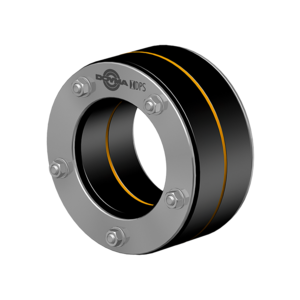
Garbe Immobilien-Projekte GmbH commissioned architects Störmer, Murphy and Partners to build the "roots". DOYMA annular space seals were planned for the construction. The major task was to seal the sprinkler tank system. The contractor Minimax from Reinfeld installed the Curaflex® C sealing systems.